



Oral anticoagulants and Atrial fibrillation

The impact of stroke can be serious and sometimes life threatening.
If you have atrial fibrillation (AF), your risk of having a stroke can be up to 5 times higher. This is because the irregular heartbeat can lead to blood clots that may travel to your brain.
AF affects over 500,000 Australians and plays a role in nearly 1 in 10 deaths. Getting checked and managing AF early can help lower your risk of stroke.

What is Atrial Fibrillation?
Atrial fibrillation (AF) is a condition where your heart beats irregularly.
With a normal heartbeat, blood pumps through all four chambers of the heart smoothly.
With AF, blood does not move through the heart as it’s should. This can cause an irregular heartbeat.
If blood does not flow through the heart properly, it can cause blood to pool in the heart and form a ‘blood clot’. If a clot breaks away from the heart and travels to the brain, it can cause a stroke.
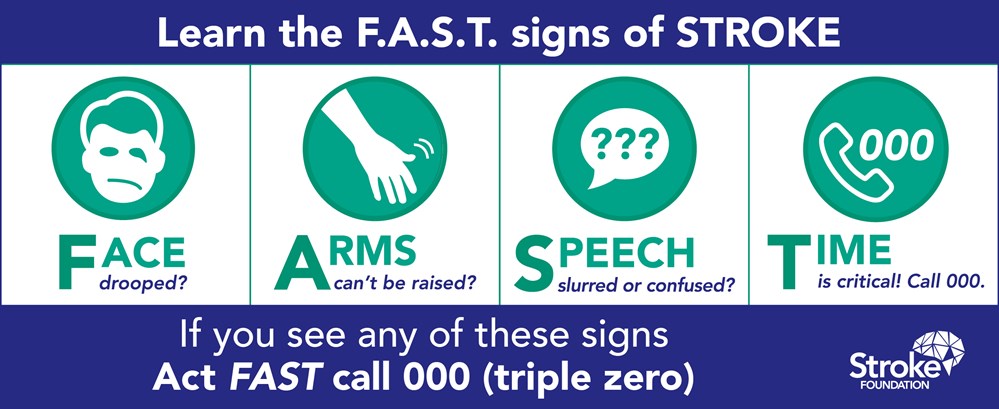
Know the signs of stroke
Knowing the signs of stroke can save a life. Use the FAST acronym to help you remember.
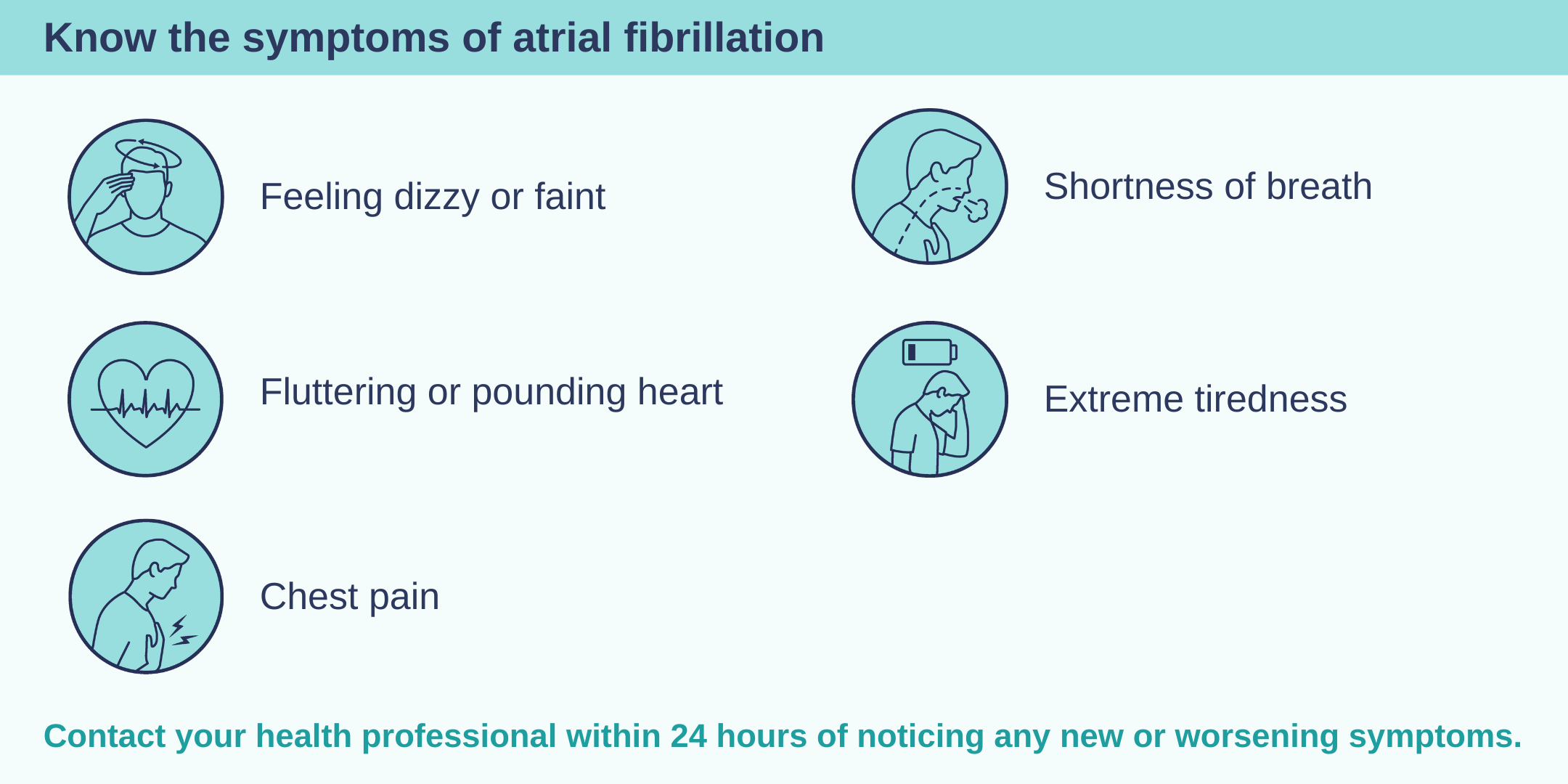
Know the symptoms of atrial fibrillation
If you have AF you might experience these symptoms. To find out if you have AF, a doctor or nurse will check your pulse. If it feels irregular, they may refer you for more tests.
How is atrial fibrillation treated?
If you have AF, your healthcare professional will work with you to manage your condition.
One treatment they might recommend is an anticoagulant medicine.
Anticoagulants are a type of medicine that helps prevent blood clots. They do not treat the irregular heartbeat directly, but they make it harder for your blood to clot. This helps lower your risk of having a stroke from AF.
Other treatments are needed to help with symptoms caused by AF.
Visit the Anticoagulants FAQ page for answers to common questions about anticoagulant medicines.
Risks and benefits of taking anticoagulant medicine
Anticoagulants can sometimes cause bruising or bleeding. However, they lower your risk of stroke, which can be more serious. For most people, the benefit of taking them, is greater than the risk of bleeding.
Call 000 or go straight to hospital if you experience signs of serious bleeding, such as:
- Nosebleeds that do not stop
- Coughing or vomiting blood
- Blood in urine or bowel movements
- Bleeding or bruising that gets worse
- Sudden and severe headache
If you notice serious bleeding or bruising while taking anticoagulants, there are other medicines that can help. Talk to your doctor if you notice any unusual signs.
With the right treatment and regular care, including taking anticoagulants safely and as prescribed, most people with AF can continue to live well.
This animation explains what AF means and how anticoagulants can help reduce your risk of stroke.
Why are anticoagulants important for managing Atrial Fibrillation?
People with AF have a high risk of stroke. A stroke can cause serious damage to the brain with long-lasting effects.
Taking anticoagulants can help lower your risk of stroke. Your healthcare professional will:
- talk to you about your options, and
- help you understand how to take your anticoagulant medicine safely. They can also answer any questions you may have.
Use the Anticoagulants Care Plan to record important information about your medicine and share it with all your health professionals. It has tips on how to talk with your health professional about taking your anticoagulant medicine safely.
The Anticoagulants care plan is also available in Simplified English and 9 other languages.

Need more information?
- Use Choosing Wisely’s 5 questions to ask your doctor before any test, treatment or procedure.
- Have medicines you no longer need? Return them for free at any pharmacy through the Return Unwanted Medicines (RUM) program.
- Find good health information at the Canberra Health Literacy Hub.
- Are you a health professional? Visit Medcast’s QHUB for Oral Anticoagulants. Find free, high-quality education and resources, on the safe use of medicines.
- Want to stay updated on this project? Register to receive updates.

Resources
Find Resources about Oral anticoagulants and Atrial fibrillation on the Resources page.

Anticoagulants Care Plan
Talk to your health professional about taking anticoagulant medicine to reduce stroke risk and live well with AF.

Oral Anticoagulants FAQs
Visit this webpage for answers to common questions about taking oral anticoagulants for AF.

Understanding Oral Anticoagulants Animation
This video will talk about the benefits and risks, and why you shouldn't stop taking them unless your doctor tells you.
Care Plan Translations
Talk to your health professional about taking anticoagulant medicine in your language with these translated plans.
